
Traversing Mount Arapahoe, ca. 1920
Woman’s Club of El Paso Speech
March 2026
Did any of you work in an office in the 1970s? Were any of you required to bring coffee to your boss? And was that boss male? I recall working on the 5th floor of the old El Paso Natural Gas Company building on Texas Street in 1972. It was the EPNG’s personnel department.
Hired to do country club and professional memberships and subscription renewals for the hierarchy of EPNG officers and managers, my job was ridiculously simple. Yes, that was an actual position. They apparently played a lot of golf and read a lot of magazines.
At about 10:15 every morning and 2:15 in the afternoon, work stopped for about thirty minutes. It was coffee break. Every secretary and office assistant—all women— stopped what they were doing to prepare coffee just the way their immediate supervisors liked, supervisors who happened to all be men, with the exception of one woman on my floor.
Just the year before, I was mesmerized with “I am woman, hear me roar!” Anyone recall who wrote and sang the song? Helen Reddy. But the big whigs at the top of the EPNG building and department heads and managers in its floors below likely never paid attention to that song. Yet it was a battle cry. That same year, 1972, Title IX passed. Girls rushed forward, their feet flying across fields, slapping basketball and volleyball courts, kicking through water to reach rewards beyond. Thank goodness—but there would be some collateral damage.
A Family Story
Historically, achievement for women has been difficult, especially for older women who were raised within a different set of norms. My maternal grandmother, who was born in 1897, saw the rise of the first women’s rights movement: the Texas suffrage movement when women got the vote in 1919. She was a native-born Texan with a strong Virginia heritage whose beliefs were borne out of the Civil War. Her parents were educated, her father a teacher. So, it is not surprising that my grandmother had opinions, both political and otherwise.
Complicating her portrait, my grandmother was not tall—or tiny! About 5’4, she was rather plump. And to make matters worse, my grandfather had insisted on naming her Olean (O-leen). Think about that. Olean (pronounced OH-lee-ann) was a town somewhere in New York state that he had seen on a map, but apparently had never heard pronounced. I can just hear the schoolboys mocking my grandmother, calling her O-fat. Her last name, Baumgardner, certainly didn’t help either.
My grandmother Olean may have had no suitors, but she had a brain. What choices might a clever 16-year-old girl make in 1911? Why, go to school! She attended West Texas State Normal College (now West Texas A&M University) in Canyon, Texas, its doors just opened in fall 1910. She didn’t earn just a degree but four teaching certifications, primarily because she possessed a remarkable curiosity for language and family history. She struggled all the while, making her clothes from hand-me-downs, ripping the fabric apart for her designs. She wrote letters on the margins of magazine pages or other harvested pieces of paper. My grandmother did not have the luxury of carrying protest posters like other women of the time, despite her personal opinions. She understood that her education would be her salvation. Music, Latin, history, and English degrees would support a long teaching career.
World War I and the Spanish flu poached potential male suitors. So before she later taught—about the only thing an educated woman could do before 1920, aside from becoming an office worker, governess, or homemaker—my grandmother courted traditionally masculine endeavors. Tucking her skirt around her, Grandmother Olean climbed into a rusty guano bucket with lanterns attached and tied to a rope (see below). Jim White, the discoverer of Carlsbad Caverns, dropped her 750 feet into the bottom of the main chamber, about 75 stories deep! The caverns didn’t become a national monument until 1923, and it wasn’t until 1932 that anyone could walk to the bottom of the main chamber.
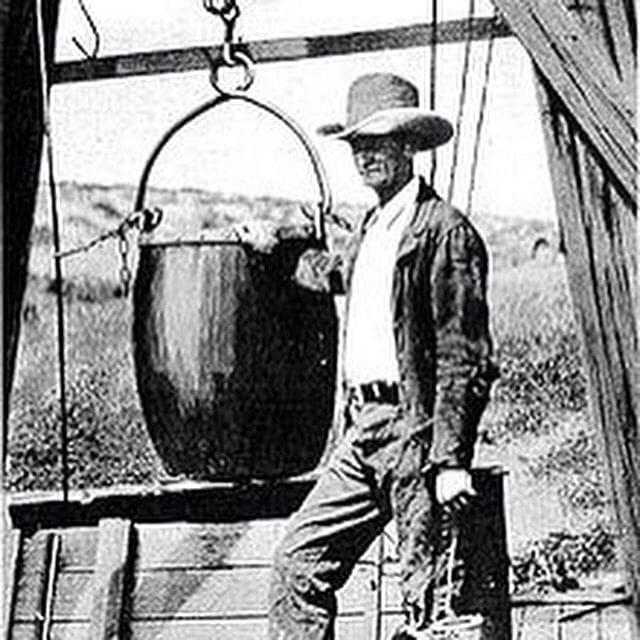
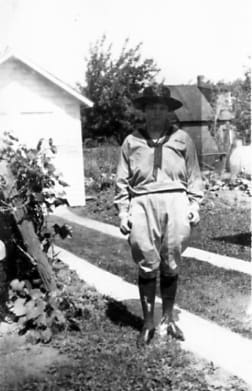
After her mother—my great-grandmother—decided to purchase a car she would never drive, Grandmother Olean became a student again. She not only took motoring lessons but also auto mechanics, so she could repair the 1920 Buick as needed, in uniform (see above), for a planned trip to Boulder, Colorado, from Mineral Wells, Texas. Instead of the car, it appears that breaking a strand of beads was her only mishap. But more adventure awaited.
Bundled in wool scarves, gloves, black skirt and coat, and wearing long johns underneath, my grandmother hiked across Colorado’s Araphoe Glacier, finally ascending near Araphoe Peak’s summit, 13,305 feet,. She didn’t carry a bottle of water in a backpack, but a paper bag of snacks and a canteen. Grandmother Olean certainly had been inspiring to a granddaughter who sat at her feet in the 1950s, listening to soft Southern dialect pulling words from Beautiful Joe and Uncle Remus.
When my grandmother finally married at age 26, it would be to a widower, a dreamer blind in one eye, who had lost his first wife to the Spanish flu. My grandparents would be married 24 years, part of that time living in eastern New Mexico on the prairie in an adobe shack without electricity during the Dust Bowl years, grandmother’s precious piano sitting next to an interior dirt wall. Then my grandfather died in 1947, after plowing on an extremely hot day.
In 1951, my fifty-four-year-old grandmother, with a ten-year-old son, moved to Austin where she earned a Master of Library Science degree. Then she went back to work after her teacher retirement, this time as a librarian. She was not a helpless woman, but a woman who defied mid-century social norms out of necessity. She had not marched collectively in a protest but individually took bold actions to survive.
Perhaps women in other family histories had time to march, carrying protest signs during a women’s rights movement, or perhaps they comfortably slipped into expected behaviors within their marriages, societal guardrails keeping them within their matronly lanes. Perhaps at 54 years old, most women only wanted to rock on their porches, hold their grandbabies, and dream of their heartbreaks and past loves.
Real-life Western Women Who Challenged the Status Quo
There have been books during my literary and personal journey that provided real-life subjects who had stories to tell, western women who elevated my understanding of how the grandmothers in my family history fared; how my life was impacted by social change; and how far forward women have generally come in our western society today.
I wrote The Girl Who Dared to Defy, Jane Street and the Rebel Maids of Denver, after discovering that my fifteen-year-old paternal grandmother had run away from an arranged marriage to a thirty-two-year-old Norwegian farmer in Iowa. She arrived in Boulder, Colorado, where she could hide, working as a housemaid. A 1915 labor study revealed that domestic work was the second most dangerous occupation in America because of sexual exploitation. The worst being prostitution. Yet, a Scandinavian proverb was that if they do not marry, “good girls become house maids.” My grandmother was Danish.
In my research on Jane Street, whom I believed to be a Denver house maid at the same time my grandmother arrived in Boulder, I had to digest facts about the women’s suffrage movement, the first wave of the women’s rights struggle and other activism. I delved into the context of Jane’s story, reading society club files and letters. I held Susan B. Anthony’s letters in my hands. In doing so, I soon discovered that the suffragists were women who had support from home, or elsewhere. There was an irony about Jane’s story, which I will explain in a moment.
First, who was Jane Street, the main subject of this biography? Jane had come from a middle-class family but had a mother who was drowning in depression after Jane’s father died unexpectedly. Drawn to a masculine relationship, she was only a girl when groomed by an older, handsome bigamist, a disgraced soldier. Jane soon became an unwed mother of two small children.
Never a housemaid, Jane, along with her sister, ran away to San Francisco, where she found stenographic work. There, she was drawn to activism, occurring around the hotel in which she worked. At first, Jane joined women in the prohibition movement, writing letter-to-the-editor pieces for newspapers. In one piece, Jane wrote:
when a man gets drunk in a saloon or place of business, the “disgrace of her men-folks is her disgrace; his sorrow is her sorrow; his fine is her fine; his poverty is her poverty and the poverty of her children. If you are a man, you will stand up for her (wives and mothers), no matter what your business association or political affiliations or your appetite may dictate. You’ll stand by her because you are a man.” (from The Girl Who Dared to Defy, Jane Street and the Rebel Maids of Denver, 2021)
Then Ludlow, Colorado, happened. During the Colorado Coal War, coal miners were evicted from their company housing during the winter of 1914 after striking for better working conditions. They were mainly Eastern immigrants, Italians, Greeks, etc. Moving into tents, almost 1,200 people, including about 268 children, occupied what would become Ludlow Colony. Today, when driving to Denver between Trinidad and Pueblo, Colorado, you pass a turnoff to a little town named Walsenburg, as well as a sign that points west, stating “Ludlow Massacre Site.” The event that happened there set Jane Street’s course in history and a women’s history watermark.
John D. Rockefeller Jr, whose company owned half of the Colorado Fuel and Iron Company, the largest coal operator in the West, and the C & S railway sent goons, under the guise of the Colorado National Guard to punish the miners living in the Ludlow tent colony. Atop railway cars, National Guard soldiers playing army, (business leaders and others from Denver), carried rifles and manned a gatling-type gun they fired upon entire families. In one tent, used as a maternity hospital, thirteen women and children were asphyxiated and burned, eleven of whom were small children. It was a horrific event.
News of the atrocity reached far and wide in the United States, and the elite wives of the National Guard soldiers defended their husbands, primarily by disparaging the social class of the women and children who died. Jane, who was a champion for children and had read about the incident, decided to punish these very women.
Within this panorama where women had already begun breaking the gender barrier, Capitol Hill housewives protested other social issues. Though the suffrage movement had begun decades earlier, and Colorado was the second state to give women the vote in 1893, these women tended to ignore the plight of working women, their working conditions and sexual exploitation. Jane challenged the status quo, opposing the elite women of Colorado, at the same time fighting her male peers.
Jane organized the domestics that worked in the mansions on Denver’s elite Capitol Hill. The very workers who gave housewives free time to be activists and protestors. Members of the Denver Women’s Club and other social and charitable organizations had discounted the women and girls who scrubbed their floors, washed their dishes and clothes, cooked their meals, and took care of their babies. Jane gave them hope. One wealthy Denver socialite did take Jane’s defense, a woman who also scorned social norms, as she also had no qualms about driving about Denver with her lover and husband both beside her!
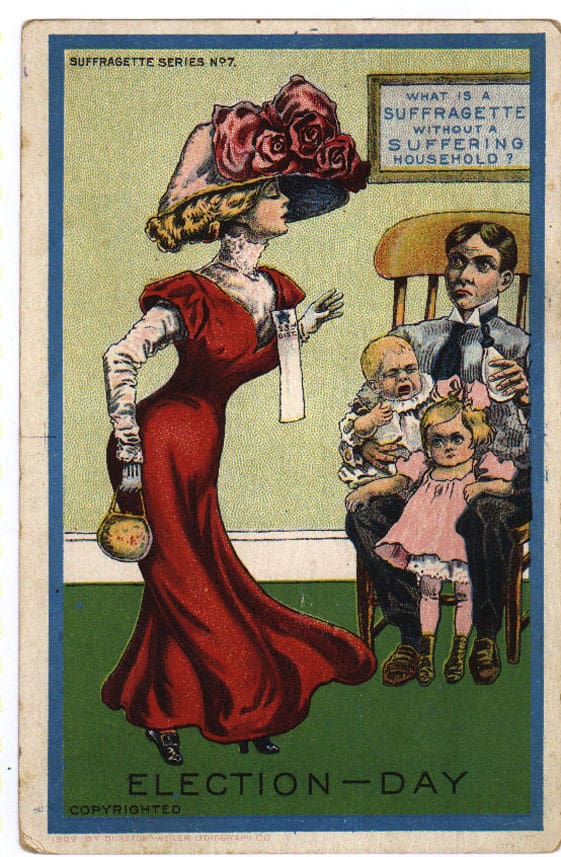
As western women, we have all have had Mexican maids. This is not uncommon for us, and it is a holdover from frontier military days when wives and notable families residing in the frontier West needed assistance. Historically this help came from Native American and Mexican women. And if truth be told, we El Paso women did not pay servants well. I remember the string of women who worked for my mother beginning at $3 a day, women who caught a bus back to Juarez for 25 cents. Some of you had and may have live-in maids now. Think about the difference in compensation between fifty years ago and now. From my book on Jane Street:
There stood “fiery little Jane Street,” as described by the disguised Post reporter in attendance, who gave her own experiences working in the kitchen of one Denver mistress. The other women viewed Jane with curiosity. The diminutive woman standing in front of them was energetic, feisty, and fearless, not tired, downtrodden, and submissive. How could she talk rebellion? It was unnatural for servants to question their masters and mistresses. In fact, the entire meeting seemed surreal, even illegal, though no laws had been broken. This young woman was awakening them to the realization that they could voice complaints about work, share commiserations, and unite with purpose. They could not peel their eyes away from Jane Street. (from The Girl Who Dared to Defy, Jane Street and the Rebel Maids of Denver, 2021)
Jane told housemaids in one of her first meetings that she could provide shelter when the women were between jobs, childcare for their babies when the women worked, classes to improve their learning, and lawyers when mistresses fired them without cause. Jane promised that “These are not idle dreams. We can do these things and we are going to do them.”
Jane employed several innovative approaches that challenged the local social order. Ultimately, she organized the first domestic workers’ union in the entire United States. Yet in the end, her efforts were frustrated by the sexism of her male counterparts, other unionists who viewed her through a gendered lens. Hers is a tragic story.
Women Who Quietly Effected Change
Other women quietly effected social change. My upcoming work, The Breath of a Buffalo: The Life of Mary Ann Goodnight, brings to light the remarkable story of a pioneering woman whose compassion and determination helped save the Southern Plains bison from extinction and shaped the social and environmental legacy of the Texas Panhandle. Born in Tennessee in 1839 to a prominent family, Mary’s early life was marked by her family’s migration to Texas, financial hardship, and the challenges of frontier living. As a young woman, she became a teacher in North Texas, where she witnessed the violence and upheaval of the Civil War and the conflicts between settlers and Native American tribes.
Mary’s life changed dramatically when she married Charles Goodnight, the legendary cattleman, theirs becoming a life-long love story between a prickly, near-illiterate, and foul-mouthed trail driver and a fun-loving but refined, petite schoolteacher. Together, they built ranching empires in Colorado and Texas, enduring financial booms and busts, personal tragedies, and the relentless hardships of frontier life. The biography highlights Mary’s resilience, intelligence, and partnership with Charles, emphasizing her role not just as a supportive wife but as an active participant in ranch management, education, and community building.
Like all stories, there is more to Mary’s mythic compassion for a handful of starving buffalo calves, that sparked the preservation of a species teetering on the brink of extinction—an act of courage that ultimately helped save the American bison and preserve a vital piece of Western and Indigenous heritage. Generally, the public was told that “Disturbed by the mass slaughter of buffalo in the Texas Panhandle, Mary insisted on rescuing and nurturing orphaned calves, ultimately establishing a foundational herd that contributed to the survival of the species.” While this is certainly true, these are the revealing details:
Along with the cracks of hunters’ rifles, pitiful bawling had rung in Mary’s ears for months, at first both day and night, though the sad sounds seemed to be lessening. On the morning of May 15, 1878, Mary inquired about the past evening’s woeful wails. Evidently, Charley believed that by removing the source of the cries, his wife’s distress would end too. He turned to one of the cowboys—reportedly one of Mary’s brothers—and told him to find the orphaned bison calf and shoot it. But Mary’s reaction was extraordinary. She told a surprised Charley and her brothers that the shooting was to immediately halt. In fact, they were to search out this bison calf and bring others to her as well. Mary Ann Goodnight would mother them herself. (from The Breath of a Buffalo: The Life of Mary Ann Goodnight, 2027)
Charles Goodnight had ordered the slaughter of 15,000 bison in Palo Duro Canyon just months earlier. He told others later that he had agreed to capture the orphaned bison calves only to pacify his wife and give her something to do. But Mary was far more interested than that, and her husband underestimated her.
Though Mary Ann Goodnight was often overshadowed by her husband’s fame, in my narrative she is given full recognition, after drawing on letters, oral histories, and archival sources to reconstruct her voice and agency. As an example, I discovered that Mary had a checking account for profits from sales of her cattle and bison. Yet, her name evidently was not on the bank account, and she could not make the deposits herself. But her husband’s name was. And when she died, Charles Goodnight had total control over her wealth and belongings, including what she brought into the marriage. I did more research on this discovery.
Did you know that until 1968, a woman in the state of Texas could not own property or start a business without her husband’s permission?
When my mother finally divorced my father, I was shocked to find out that she had no credit card, checking account, or savings in her name. Hers was a tough situation, and as for me, a twenty-year-old with a job, I immediately ordered my first credit card, a Texaco gas card. No longer searching for coins in the ash tray, the card symbolized so much more than easy access to fuel my car. I still have this card because of the financial freedom it represents.
One “Texas Strong” woman changed the power that husbands had over their wives—a Dallas homemaker and attorney named Louise Raggio. She famously exclaimed that “the husband and wife were one, and he was the one!” Louise
“was part of the first generation of female lawyers in Texas and the driving force behind the state’s Marital Property Act of 1967, a little-known but influential piece of legislation that gave married women the same rights as their husbands and paved the way for the country’s first unified family code. Prior to the law, women had the same rights as “infants, idiots and felons,” as Raggio wrote in her autobiography, Texas Tornado. …Texas law required married women to receive permission from their husbands for every signature, lawsuit, and bank check…” (from Morgan Hanlon, Texas Monthly, January 2021)
Louise held three jobs while earning her undergraduate degree at the University of Texas in Austin. She later enrolled in Southern Methodist University’s law school, taking night classes while caring for her three children and husband during the day. She was the only woman in her class when she graduated in 1952. As an assistant DA in Dallas County, she became aware of deep-rooted injustices within Texas’s family laws. In fact, after her husband had to sign bail bonds for her clients, Louise decided to do something about it. Louise drafted the Marital Property Act of 1967 while working as a homemaker and simultaneously for the Texas State Bar Association. There, she lobbied officeholders to push the legislation through. And they finally did.
The Matrimonial Property Act was signed into law by Governor John Connally, taking effect on January 1, 1968. You may know this in Texas as the “community property law,” but obviously there is more to it. Because of this act, married women could enter contracts and sell community property without needing their husband’s approval. And they could have their own financial freedom.
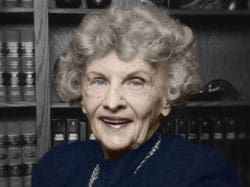
While Mary Ann Goodnight would become known as the “Orphan Mother of the Plains,” Louise Raggio became known as the “Mother of the ERA” in Texas.
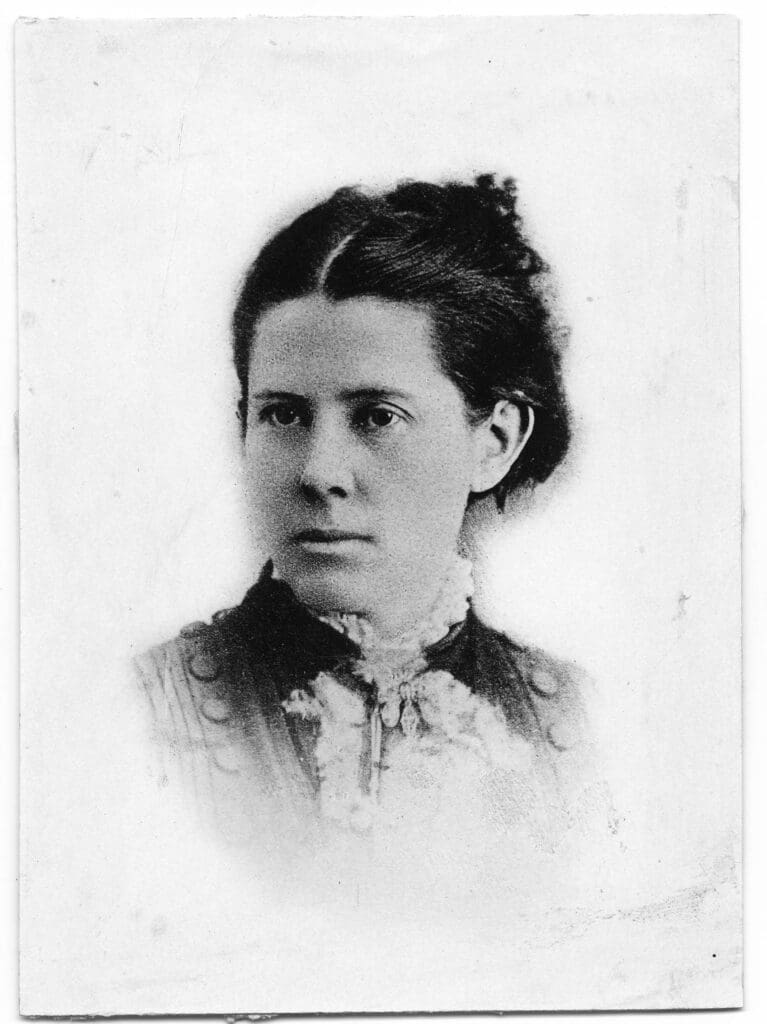
(Louise Raggio, left, and Mary Ann Goodnight, right).
The American Counterculture Era
Even though I was familiar with my mother’s and both my grandmothers’ personal histories, I never connected that my own life had been molded by a women’s rights movement, informally called the second wave, set during the 1960s and 1970s. Do any of you recall when Philip Morris first presented the Virginia Slim cigarette to the American public? This brand was aimed at women, and it was a genius move. Anyone in the audience recall the motto? “You’ve come a long way, baby.” Philip Morris’s “campaign targeted women by linking smoking with liberation and empowerment.”
The Women’s Liberation Movement had been a remarkable event beyond Viet Nam War protests, hippy girls wearing flowers in their hair and smoking marijuana joints in parks. Though I briefly smoked Virginia Slims at my sorority house and certainly understood the slogan, I was oblivious to the historic era in which I had lived until I wrote my memoir, The Pink Dress, A Memoir of a Reluctant Beauty Queen. I discussed this book with you exactly a year ago.
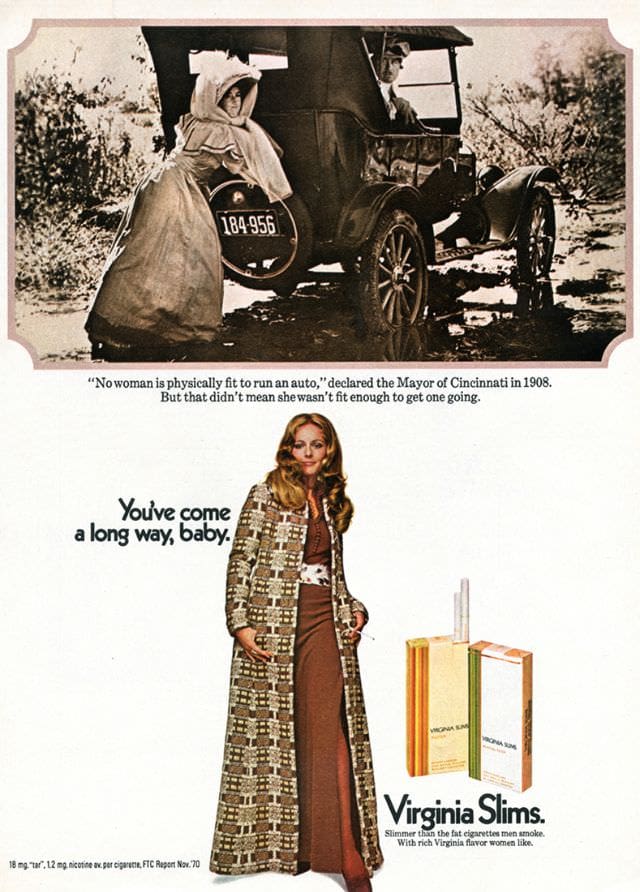
The 1960s’ cultural changes are historically known as the American Counterculture Era, a period that bled into the 1970s. Generally, we had been rebels, a few who possibly would be called radicals today. Some of my peers lived for social protests while others, like me, had parents who tried to curb our enthusiasm for changing the status quo. But away from the house, we witnessed and sometimes participated in high school and college campus sit-ins and sign-waving protests.
El Paso was different in that we were also a military town, its distinctions reflected especially in Northeast El Paso where I was raised. We young women were conflicted with the cultural rebellion sweeping the nation. We generally supported our boys in Viet Nam, at the same time wanting them home. We had brothers, fathers, and sweethearts who went to Viet Nam or had friends who did. We dated officers who took us to the officers’ club and many of our families shopped at the commissary. We joined ROTC girls’ organizations on high school campuses. While we girls couldn’t or perhaps wouldn’t effect change in this area, we certainly recognized and voiced our diverse opinions about Viet Nam and women’s rights! For me, personally, I wouldn’t have dated a boy who burned his draft card, but I certainly would have burned my bra if given the opportunity. Women’s Lib had been provocative.
Yet there was another cultural phenomenon happening concurrently in El Paso. When GuyRex Associates took charge of me, in 1971, I became part of this too. Richard Guy and Rex Holt may have been gay—personal partners, but they were still men who possessed idealized notions of a woman’s image!
Guy and Rex were hooked on Hollywood, a Hollywood that generally did not release movies that reflected radical women’s views or clarion calls for social change. Especially within westerns, those filmed in and near El Paso, women’s images were still sexualized. As examples, look at Raquel Welch in this still photo from the early 1970s.
On television and in the movies, women wore foundational garments that made their breasts look like Northeast El Paso missile tips! And because of GuyRex’s fascination with Hollywood, my gowns had to be built similarly. In fact, the men saw that my body morphed over time to fit this idealized, feminine look. And when my body did not naturally contour to their expectations, I wore a Merry Widow. If you are older, you will know what this is. The Merry Widow! What a misnomer it was.
And when GuyRex put El Paso on the map nationally with six Miss USAs, five of them consecutively, the women all dressed in western wear—SEXY western wear—on the world stage. GuyRex sent their Miss USAs abroad in Tony Lama boots, gauchos and vests, cowboy hats, etc. with plenty of skin showing. They pushed our collective western attitude into the world, enhanced by beauty queens proudly displaying their American looks, choosing to display their bold cinematic, western images. With me, “El Paso, you’re looking good!” became the city’s mantra. But by this point, all beauty contestants had choices they could make. If they wanted to display their bodies in a certain way, they could, and not be judged for their decisions. On the other hand, the Miss America Pageant simply scrapped the swimsuit contest.
All the women I have presented today have similar attributes. They were bold for their times. They found ways to advance themselves, despite penury and a historically patriarchic society. They knew when to speak out, even at great risk, and they knew when to effect change quietly, confident in their success. They knew when to use their womanhood to their benefit, proudly displaying their attributes because they chose to. You’ve come a long way, baby!
A little over twenty years later, in the early 1990s, I was in the classroom with high school students when I realized that my sons would have to fight to maintain some of their traditional male roles. Dripping Springs High School, where I spent 19 years, would win the state girls’ basketball and volleyball championships while I was there. Girls 2, Boys 0.
The girls in Dripping Springs were on a roll, and their successes permeated everything they did. I saw more confidence, eyes lit with the realization of success, which in turn, translated to personal drives for lofty goals, including complex academic degrees—and certainly, less dependence on boys. Women, in America, had finally breached the summit of their liberation.
But the battle for equal rights arrived at a cost. Recall that I mentioned collateral damage? As a former teacher, I witnessed the effects of the women’s movement in the classrooms where I taught, where women, fighting for their ground (and deservedly so), would assert dominion in a society that had been so patriarchal. I also saw that young men would not stand a chance if they tried to operate within the behavioral expectations or norms that had been set decades before. But becoming molded in entirely the opposite course, one that emasculates their God-given attributes, is destructive to all, including women.
I am a mother of two sons and grandmother to three boys. And, I have one granddaughter who can be anyone, anything she wants to be. I believe that mothers and grandmothers have a responsibility, not only to their daughters at this juncture, but to their sons as well. Recall Jane Street’s words to men as she appealed to their masculine responsibilities to not indulge in alcohol? “You’ll stand by her because you are a man.” We must encourage our sons to be men again, how to respect and love a woman for her remarkable qualities—not submit to everything she demands—OR beat her down in submission. Women have arrived, and whether they believe it or not, they need men to be equal partners in their personal lives.
Historians will look back one day and label the times we are living now as a third wave for the fight for women’s rights. Men in women’s sports. Ambiguities when defining women. We are living history—now—in this room. As women, we have more to accomplish in honestly assessing who we truly are and want to be—and how women’s goals should work in tandem with how our personal and family relationships should be.
Thank you for inviting me. This has been the highlight of my spring!
